
Project Title: Evaluating Solid-source Ocean Alkalinity Enhancement in Coastal Waters
To inquire, contact: max.rintoul@utas.edu.au
Project Description
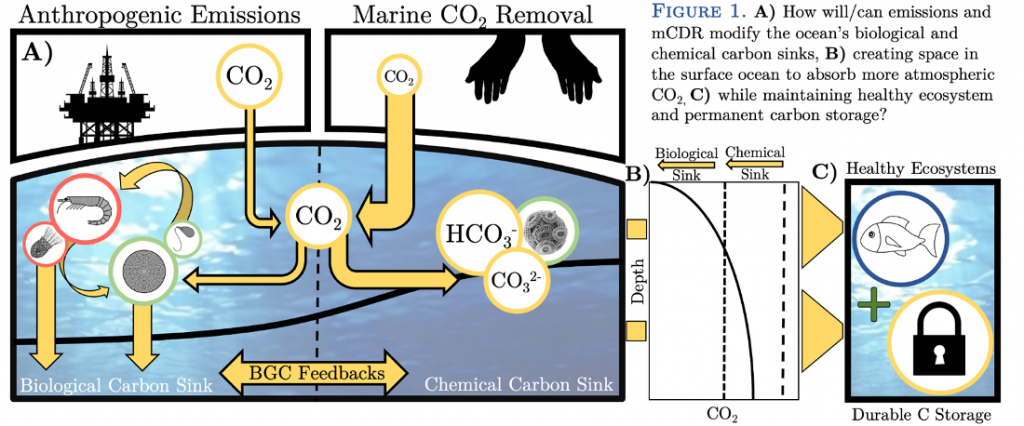
To keep global warming below 2°C by 2100, every pathway considered in the 6th IPCC Assessment Report required carbon dioxide removal (CDR). Many CDR technologies intend to engineer the oceans by biologically or chemically manipulating the marine carbon cycle1. This is referred to as marine CDR (mCDR). Before we can responsibly implement mCDR for climate intervention we must understand its impact on marine ecosystems2 and its efficiency for carbon sequestration3,4. However, the longer we wait to intervene, the larger the climatic disturbance to the ocean will be. Even if atmospheric temperatures are eventually restored (through natural or engineered removal) many changes to the ocean may not be reversible5. Thus, to avoid substantial atmospheric temperature overshoot and minimize the risk of irreversible disturbance to the ocean, the time to evaluate mCDR is now.
This project aims to
Project Details
Please note that project details are not set in stone and can be modified to some degree, based on new finds and the students interest.
References:
- Doney (2024). 10.1146/annurev-marine-040523-014702
- Bach (2019). 10.3389/fclim.2019.00007
- Siegal (2021). 10.1088/1748-9326/ac0be0
- Bach (2024). 10.5194/bg-21-261-2024
- Harrison (2022). 10.1029/2021AV000610
- Zhou et al. (2024). 10.21203/rs.3.rs-4124909/v1
- NASEM Research Strategy for Ocean-based CDR (2021). 10.17226/26278
- He and Tyka (2023). 10.5194/bg-20-27-2023
- Cooley et al. (2024). 10.1146/annurev-marine-032122-113850
- Fennel et al. (2023). 10.5194/sp-2-oae2023-9-2023